It clings, it flakes, and wears a dull, patchy brown that laughs at steel wool. You scrub, you salt-scrub, you bake on fresh oil—and breakfast still glues itself down again. Every home cook hits that wall eventually. But there’s a cure most kitchens forgot, tucked away in garages and backyard sheds, where old-timers kept both their tools and their secrets. It’s not a trick—it’s patience and chemistry.
The Forgotten Soak
The skillet in my hands came from a church rummage table—five bucks and an apology from the volunteer who swore it was “on its last legs.” The handle was smooth like a river rock. The cooking surface looked hopeless: pitted, sticky, mottled with gummy buildup.

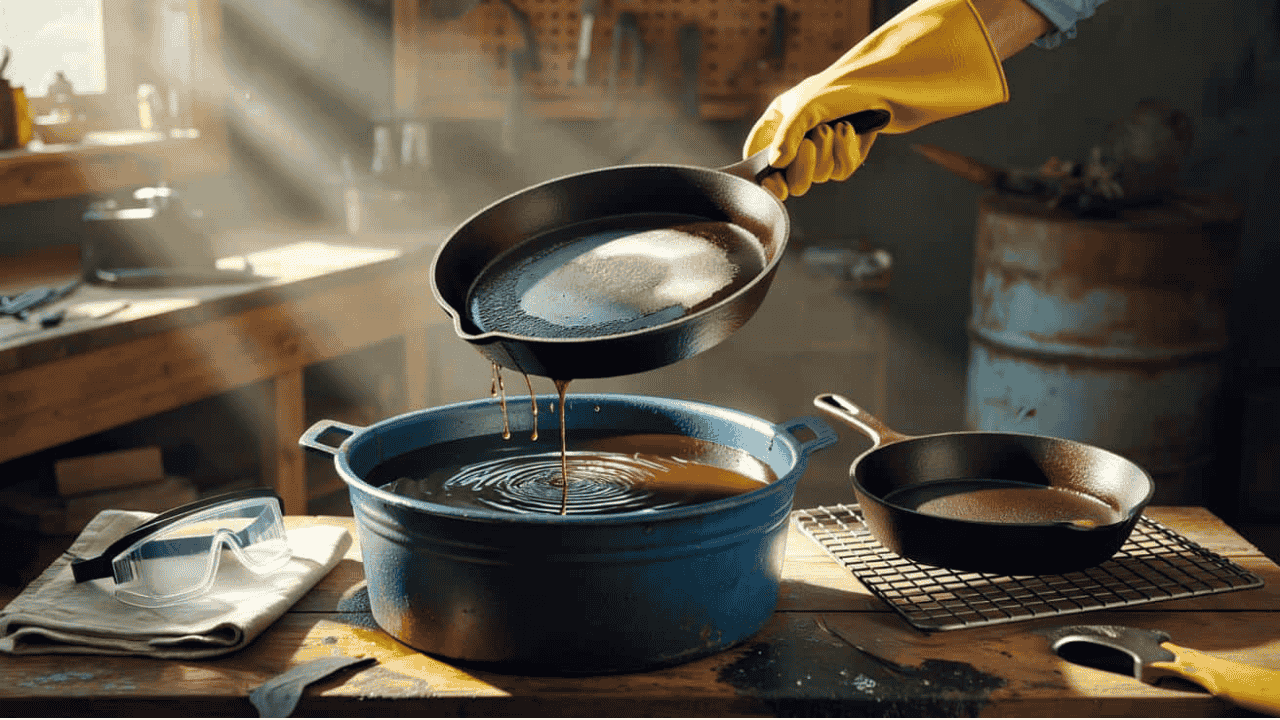
A friend with a tinkerer’s streak nodded and led me to his garage. There, on the bench, sat a heavy plastic tub half-filled with a clear solution. “Lye bath,” he said. The pan went in with a quiet ripple. We left it overnight.
By morning, the water had turned the color of weak coffee. The skillet underneath looked decades younger. Another short soak, a rinse, and the iron turned that clean, silvery grey that only raw metal knows. An hour later, in a hot oven with a film of oil, it deepened to black again—the kind of black that hums under light.
Then the water turned ink-dark.
What the Lye Bath Does

Names vary—“lye bath,” “strip tank,” “the old soak”—but the principle’s the same. You immerse cast iron in a water-and-lye solution that dissolves built-up oil and carbon residue right down to bare metal.
Lye (sodium hydroxide) doesn’t harm iron; it only attacks the greasy polymers your scrubber can’t. Think of it like stripping wallpaper before painting: the mess softens, slides away, and the metal underneath remembers smoothness. When you pull the pan out, it won’t be pretty yet—just raw and grey. That’s the sweet spot.
Chemistry 101
Lye breaks long-chain bonds in old cooking oils, turning them into soap-like material that lifts with water. Once that grime is gone, air and moisture can flash-rust the surface almost immediately. That’s why the next step is a short vinegar soak—half white vinegar, half water—to dissolve any orange haze. Then rinse, neutralize with a sprinkle of baking soda, dry, and season.

Here’s a quick guide:
| Step | Solution | Duration | Purpose |
|---|---|---|---|
| Strip | 1 lb sodium hydroxide : 5 gal water (450 g : 19 L) | 24–72 hrs | Dissolve old oils |
| Rinse | Warm water, nylon brush | — | Remove residue |
| De-rust | 50/50 white vinegar + water | 5–20 min | Remove flash rust |
| Neutralize | Baking soda + water rinse | 1 min | Stop acid action |
| Season | Thin oil coat at 475–500°F (245–260°C) | 1 hr, 2–3 cycles | Build new finish |
Always add lye to water, never water to lye, and wear gloves and goggles. Use a lidded HDPE (high-density polyethylene) tub and keep it outdoors or in a well-ventilated space.
The First Revival
I watched a neighbor rescue his grandmother’s 10-inch pan this way after three frustrating seasons and a near trip to the trash. Day one: brown streaks in the bath. Day two: black ribbons drifting like seaweed. Day three: a soft-grey pan that looked factory-fresh. One short vinegar dip, then seasoning. The next weekend, his fried eggs practically levitated.
He texted me one line: “It’s like the pan remembered who it was.”
Why It Works
A well-seasoned pan is polymer chemistry made edible. Thin layers of oil heated past their smoke point reorganize into hard, carbon-rich films that resist sticking and rust. But when those films oxidize unevenly—or when you’ve layered too much oil too fast—they go gummy. The lye bath resets the chemistry. It gives you a clean slate for even polymerization again.
Skip the shortcuts. Steel wool leaves scratches, self-cleaning ovens warp pans, and harsh abrasives dig into the seasoning you’re trying to build. The soak method is gentler and more thorough because it dissolves, not scrapes.
Common Mistakes
- Mixing lye into water too quickly (it reacts violently—add slowly).
- Leaving a pan too long in straight vinegar, which can etch metal.
- Applying oil too thickly during seasoning, causing tacky buildup.
- Expecting one coat to do the job—three thin coats are the sweet spot.
Most pans won’t ever need a full lye bath unless they’re yard-sale rescues or covered in mystery coatings. But if you’ve inherited a skillet that smells faintly of rancid oil or turns food bitter, it’s worth the reset.
From Grey to Glory
Once the metal is bare, season thin and hot. Grapeseed or canola oil works beautifully. Apply a whisper-thin coat, wipe almost all of it off, and bake upside down for an hour at 475–500°F. Cool in the oven and repeat.
The first sheen looks dull—keep going. The second coat builds depth. The third gleams. When you run your finger across the surface, it should feel smooth as glass, not greasy. That’s the moment you’ve brought the pan back to life.
The Philosophy in the Process
“My granddad kept a blue barrel behind the shed for fixing ‘ruined’ skillets,” an old neighbor told me. “He said iron never gives up—people do.”
That line sticks. Because restoring a cast-iron pan is less about the metal than about patience. You stop treating the skillet like a fragile relic and start using it like it was built to be used. Steaks sear again. Cornbread edges crisp clean. Breakfast eggs lift with a flick instead of a prayer.
The soak strips more than gunk—it strips fear. You realize these tools were meant to outlive us, if we just give them a chance.
FAQs
Is lye safe for cast iron?
Yes. Sodium hydroxide attacks grease, not iron. Properly diluted and handled, it leaves the metal intact.
Can I use oven cleaner instead?
Some people do—it’s basically lye in aerosol form—but a soak is more even, and you avoid propellants and additives.
Is vinegar enough on its own?
No. Vinegar removes rust, not old seasoning. Use it after the lye bath, briefly.
Will stainless tools rust in lye?
Most won’t, but rinse immediately. Aluminum reacts violently—keep it far away.
How often should I re-season?
Light touch-ups (thin oil wipe, short bake) every few months keep the surface perfect.