
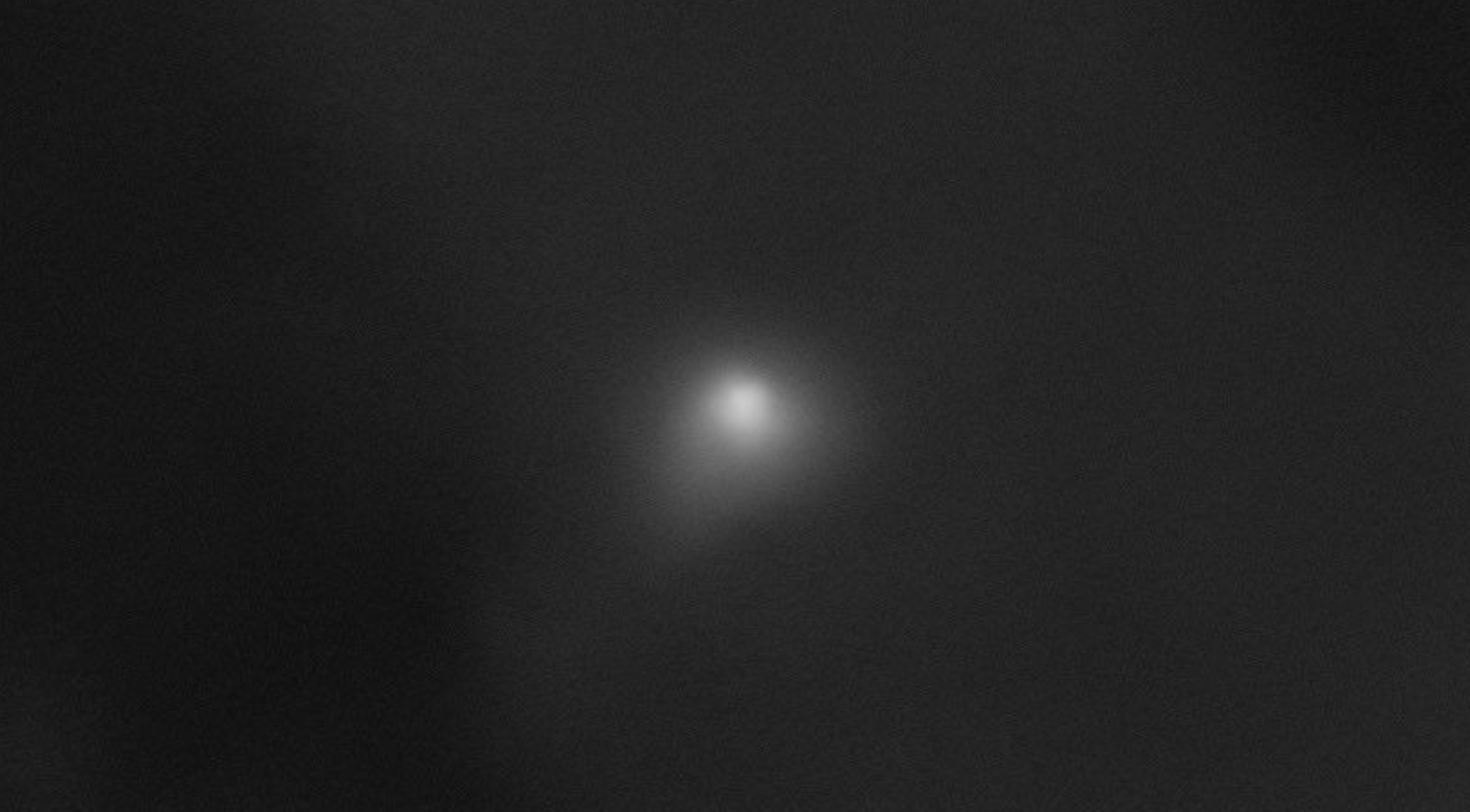
To most folks keeping half an eye on the markets and the other on the holiday calendar, a wandering interstellar comet probably doesn’t scream “breaking news.” But every now and then, a space story lands with the kind of scope and scale that forces even Wall Street analysts to put down their coffee. Comet 3I/ATLAS—only the third confirmed interstellar visitor ever detected—has NASA scrambling an armada of spacecraft across the solar system. And the scope of this coordinated chase says a lot about where American science funding, technology, and even future commercial space ambitions are pointed right now.
NASA Goes Solar-System Wide
NASA doesn’t often turn a dozen different space assets toward a single object, but that’s exactly what’s happening with 3I/ATLAS. The comet was first spotted on July 1 by the ATLAS survey telescope in Chile, a project funded through NASA’s Planetary Defense Coordination Office (PDCO) under the umbrella of the agency’s broader mandate to detect and track near-Earth objects. The PDCO’s mission details sit publicly on https://www.nasa.gov/planetary-defense/, for anyone who wants the fine print.
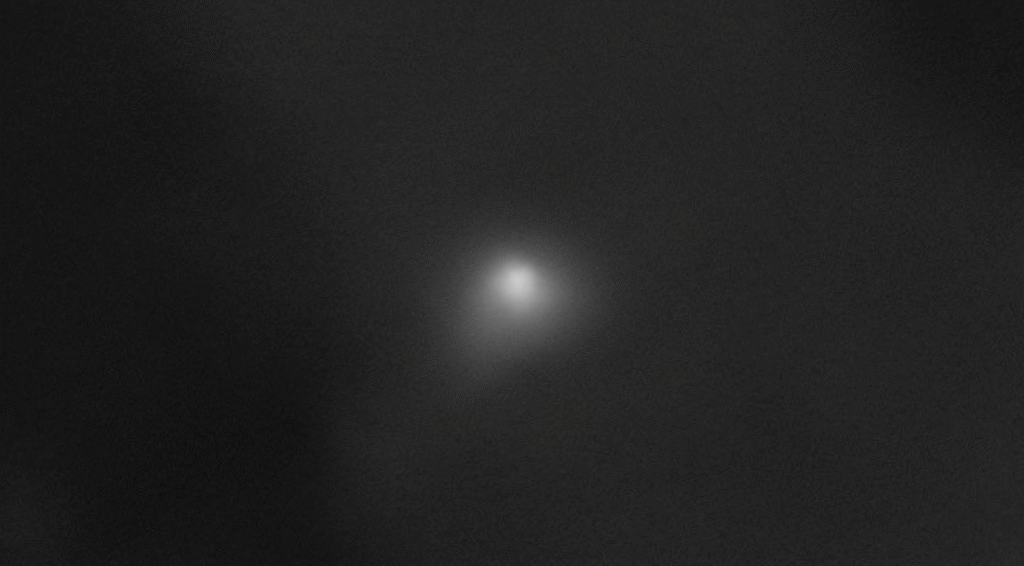

From there, things moved quickly. By fall, spacecraft spread from Earth’s orbit to the Martian neighborhood snapped images, logged ultraviolet spectra, and grabbed whatever data they could before the comet swings out toward Jupiter’s orbit in 2026. Unlike our home-grown comets—icy leftovers from billions of years ago—3I/ATLAS was born in a different star system entirely, which gives scientists the sort of once-in-a-generation comparison point rarely available.
If it feels like NASA is treating this comet like a visiting dignitary, you’re not wrong. Every spacecraft with a camera and a spare moment seems to have taken a look.
A Martian Front-Row Seat
The closest views came not from Earth but from the Red Planet. When 3I/ATLAS drifted about 19 million miles past Mars, NASA’s Martian fleet took advantage of the cosmic drive-by.
- Mars Reconnaissance Orbiter (MRO) captured the closest, sharpest images.
- MAVEN logged ultraviolet data—gold for scientists trying to decipher chemical composition.
- Down on the dusty surface, the Perseverance rover snagged its own faint snapshot. You can practically imagine engineers pausing the rover’s usual rock analysis to whisper: “Just take one picture. Trust us.”

All of this data will help calibrate models of how an interstellar comet behaves differently compared to the usual crowd of icy wanderers swinging out of the Oort Cloud.
When the Sun Blocks the View
Back home, Earth-based telescopes got stuck in the worst possible position: staring directly into the glare of the Sun. That’s where NASA’s heliophysics missions came into play—spacecraft designed to observe the solar environment can see what ground telescopes simply cannot.
- STEREO tracked 3I/ATLAS from Sept. 11 to Oct. 2.
- SOHO, jointly run by ESA and NASA, followed up from Oct. 15 to 26. Its mission archive sits at https://soho.nascom.nasa.gov/.
- PUNCH, launched earlier this year, caught the comet’s tail between Sept. 20 and Oct. 3, offering some of the most dramatic wide-field views.
For heliophysics teams—accustomed to solar storms, coronal mass ejections, and other fireworks—this is the first time they’ve deliberately watched an object from another star system. A small milestone, but a notable one.
Asteroid Missions Join the Hunt

Further out in the solar system, the spacecraft Psyche and Lucy—both headed toward asteroid targets—also squeezed in time for comet-watching.
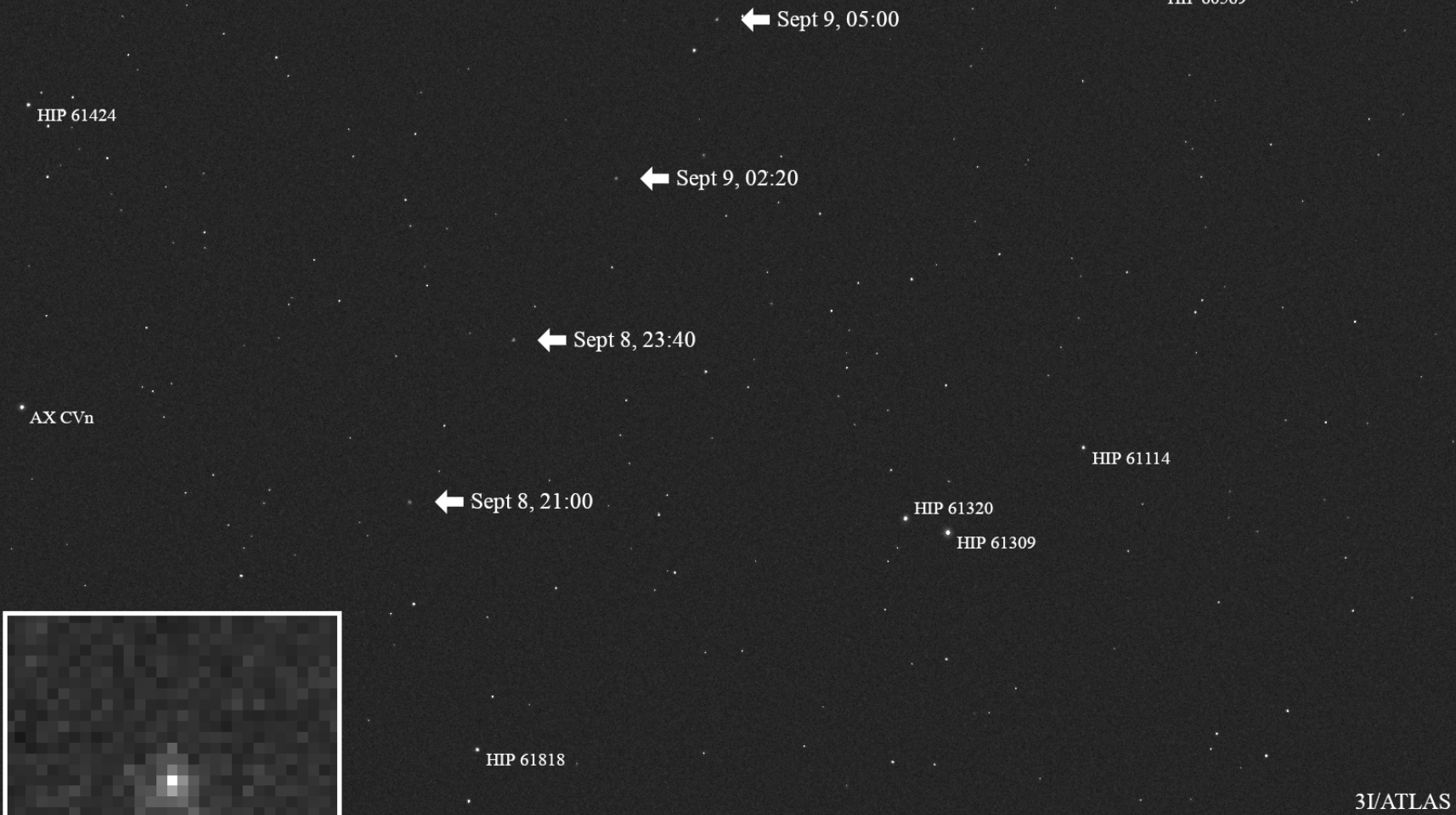
Psyche, roughly 33 million miles away, took four sets of images over eight hours on Sept. 8 and 9. Scientists will use these to refine the comet’s trajectory, which has surprisingly high value when you’re tracking something not gravitationally tied to our Sun’s original protoplanetary disk.
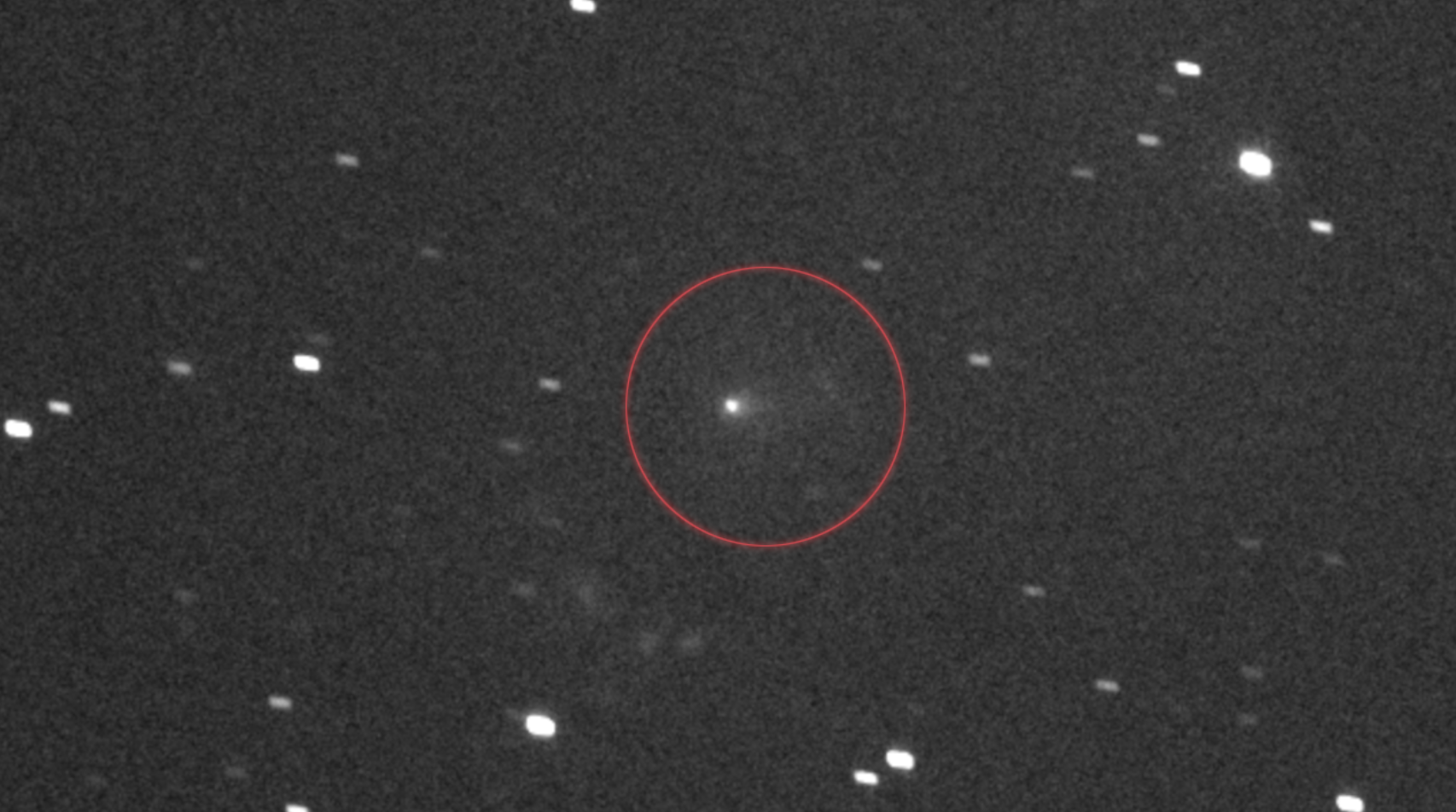
Lucy, farther still at 240 million miles, stacked its own frames to build a clearer picture of the comet’s expanding coma and faint tail. It’s almost unusual how many different vantage points NASA has stitched together here, like a cosmic paparazzi squad.
The Space Telescope Roundup
Once ATLAS flagged the comet, the usual big guns joined in: Hubble, James Webb, and SPHEREx. Hubble caught early images in July, while Webb and SPHEREx—both infrared powerhouses—collected data in August.
This combination matters because JWST’s spectral capabilities can pick apart the chemical ingredients of 3I/ATLAS: water vapor, carbon compounds, dust temperatures, all the obscure molecular signatures that hint at what sort of star system this thing once called home.
And if you’re wondering whether any of this ties into broader economic or technological storylines, it does. Every time NASA coordinates this kind of multi-mission observation campaign, it effectively pressure-tests spacecraft longevity, communications networks, and data pipelines—the same infrastructure commercial players increasingly rely on through public-private partnerships. In plain speak: when NASA sharpens its tools, private space companies benefit down the line.
How Close Will It Get?
“Close” is doing a lot of work here. On Dec. 19, 3I/ATLAS will pass about 170 million miles from Earth—almost twice the Earth–Sun distance. No threat, no emergency press briefings, and definitely no Hollywood-style asteroid-diverting missions.
But scientifically? It’s a jackpot. After the comet loops past its closest approach, it’ll sling outward, crossing Jupiter’s orbit around spring 2026, before inevitably disappearing into the long, dark stretch between stars.
What NASA Hopes to Learn
With this much data, scientists are hoping to answer a few big-picture questions:
| Research Question | Why It Matters | Instruments Contributing |
|---|---|---|
| How do interstellar comets differ chemically from ours? | Offers clues about the diversity of planetary systems | JWST, SPHEREx, MAVEN |
| How do they behave near the Sun? | Helps refine models of comet dynamics in different environments | STEREO, SOHO, PUNCH |
| What trajectory is 3I/ATLAS truly taking? | Helps validate interstellar object detection and prediction models | Psyche, Hubble, ground-based telescope networks |
| Do interstellar objects pose tracking challenges for future defense systems? | Critical for long-term planetary defense strategies under PDCO | ATLAS survey, Hubble, MRO |
For the public, it’s a rare chance to see just how decentralized NASA’s observational power has become. For scientists, it’s Christmas in July, August, September, and honestly all the way through December.
Fact Check
This story is genuine and based on official releases from NASA. The interstellar comet 3I/ATLAS is a confirmed object, documented through NASA’s Planetary Science, Heliophysics, and Space Telescope Science Institute channels. Readers can review mission data at https://www.nasa.gov, the SOHO official site, and the STEREO archive at https://stereo.gsfc.nasa.gov/. No speculative claims or unverified discoveries are included here.
FAQs
Is comet 3I/ATLAS dangerous to Earth?
No—its closest approach is 170 million miles away.
How many interstellar objects have been observed before this?
Two: 1I/‘Oumuamua and 2I/Borisov.
Why is NASA using so many spacecraft?
Different missions provide different vantage points, wavelengths, and scientific tools.
What happens to the comet after 2026?
It continues outbound and eventually leaves the solar system permanently.