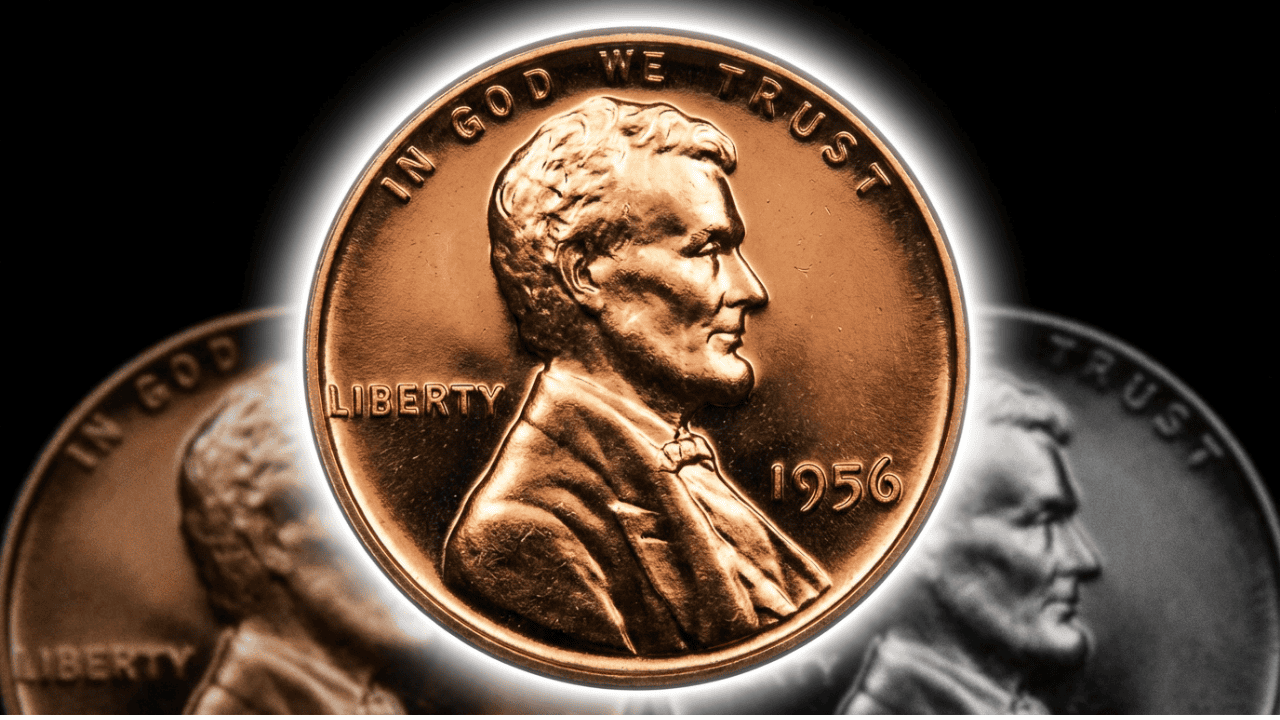
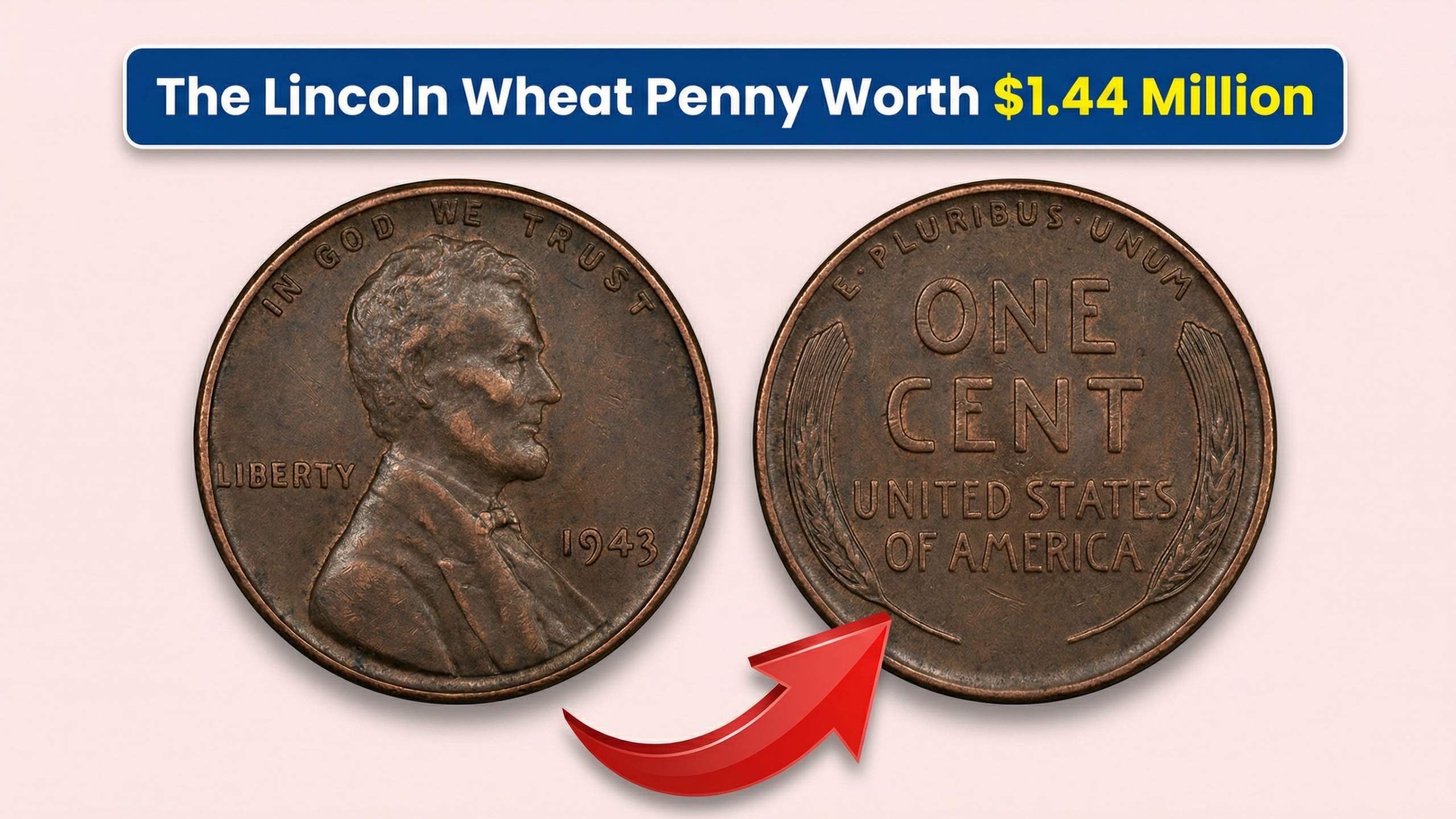
It’s wild to think a coin worth just one cent could end up being worth more than a sports car—or even a suburban home—but that’s exactly what happened with a 1943 Bronze Lincoln Wheat Penny. One of these tiny copper-colored miracles sold for a jaw-dropping $1,440,000, making it one of the most expensive pennies ever struck by the U.S. Mint.
And here’s the part that makes every coin jar in America suddenly interesting: coins like this might still be floating around in circulation. That’s right—your next big payday could be sitting at the bottom of your kitchen drawer.
A Century-Old Tribute Turned National Icon
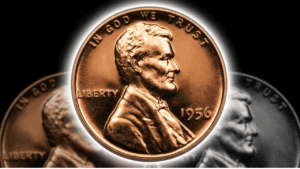
The Lincoln Wheat Penny was born in 1909, the same year the U.S. celebrated the 100th anniversary of Abraham Lincoln’s birth. It marked a first in American coinage—a real person’s face on a U.S. coin.
Sculpted by Victor David Brenner, the design features Lincoln’s portrait on the front and two wheat stalks flanking the words “ONE CENT” on the back. Those wheat ears gave rise to its enduring nickname: the “Wheat Penny.”
From 1909 to 1958, billions of these coins were minted across Philadelphia, Denver, and San Francisco, and most are still worth only face value. But a few rare variations—like the 1909-S VDB, 1914-D, and especially the 1943 bronze penny—are worth serious money.
You can read more about its origin on the U.S. Mint’s official history page.
The Million-Dollar Mistake: How the 1943 Bronze Penny Was Born
The magic of the 1943 Bronze Wheat Penny lies in an innocent wartime mistake.
During World War II, copper was a critical war material, needed for shell casings and wiring. To conserve it, the U.S. Mint switched to zinc-coated steel for penny production in 1943.
But here’s where fate intervened: a few leftover bronze planchets from 1942 accidentally slipped into the coin presses. Those stray blanks were struck with the 1943 design—creating one of the most famous minting errors in history.
Only a handful of bronze 1943 pennies exist. And because they were never meant to be minted, their rarity and intrigue have turned them into legends among collectors.
One pristine example sold for $1.44 million through Heritage Auctions, a record that sent shockwaves through the numismatic world.
What Makes It So Valuable
So why the insane price tag? It’s a mix of rarity, error, and history.
| Factor | Why It Matters |
|---|---|
| Wartime Error | Produced during WWII when copper was restricted |
| Limited Quantity | Fewer than 20 confirmed examples exist |
| Unique Composition | Made of bronze instead of steel |
| Historical Significance | Reflects wartime scarcity and minting innovation |
| Collector Demand | One of the “holy grails” of U.S. coin collecting |
Even circulated examples of this coin—if authenticated—can fetch hundreds of thousands of dollars.
How to Spot a 1943 Bronze Penny
Think you might have one? Here’s your quick field test before you call the auction house.
- Check the Year: Look for 1943 on the coin’s front.
- Test with a Magnet: Real bronze coins won’t stick. If it does, it’s steel and worth only a few cents.
- Inspect the Color: Bronze coins have a reddish-brown or copper hue, while steel ones appear silvery-gray.
- Look for Mint Marks: Check below the date for a D (Denver) or S (San Francisco)—these can influence value.
If your 1943 penny passes the magnet test, don’t get excited just yet. There are counterfeits out there—especially copper-coated steel versions. That’s why authentication is crucial.
Where Rare Pennies Have Been Found
Here’s the fun part: people have found valuable Wheat Pennies in old jars, garage sales, and even loose change from a gas station. One 1943 bronze penny reportedly surfaced in a teenager’s lunch money in the 1940s.
Because many of these coins entered circulation by accident, they’ve quietly traded hands for decades. There’s no telling where the next one might pop up.
What to Do If You Think You Have One
First rule: don’t clean it.
Cleaning can scratch the surface or alter the natural toning, which can slash the value dramatically.
Instead:
- Store it safely in a soft holder or envelope.
- Get it authenticated by a trusted grading service like the Professional Coin Grading Service (PCGS) or the Numismatic Guaranty Company (NGC).
- Avoid eBay listings and quick-sale offers until you know what you’ve got.
- Consider an appraisal from a reputable coin dealer or auction house.
If verified as genuine, your find could change your financial outlook overnight.
The Allure of the Wheat Penny
The Lincoln Wheat Penny isn’t just an old coin—it’s a snapshot of American resilience. It survived world wars, design changes, and even a presidential assassination anniversary.
For collectors, it represents history in their hands. For investors, it’s an asset class that blends nostalgia with tangible value. And for the lucky few, it’s a one-cent miracle worth more than a lifetime of spare change.
So next time you’re counting out pennies at a grocery store or emptying your glove compartment, take a closer look. That unassuming brown coin could be the $1.44 million jackpot you didn’t know you had.
FAQs
What is a Lincoln Wheat Penny?
A U.S. penny minted between 1909 and 1958 featuring Lincoln on the front and wheat stalks on the back.
Why is the 1943 Bronze Wheat Penny rare?
It was mistakenly made of bronze during a wartime year when pennies were supposed to be steel.
How can I check if my penny is valuable?
Look for the year 1943, check for a mint mark, and test if it sticks to a magnet.
Should I clean my old penny before selling it?
No. Cleaning can reduce the coin’s collector value. Always leave it as-is and let professionals handle grading.
How much did the most expensive penny sell for?
A 1943 bronze Wheat Penny sold for $1,440,000 at auction.