
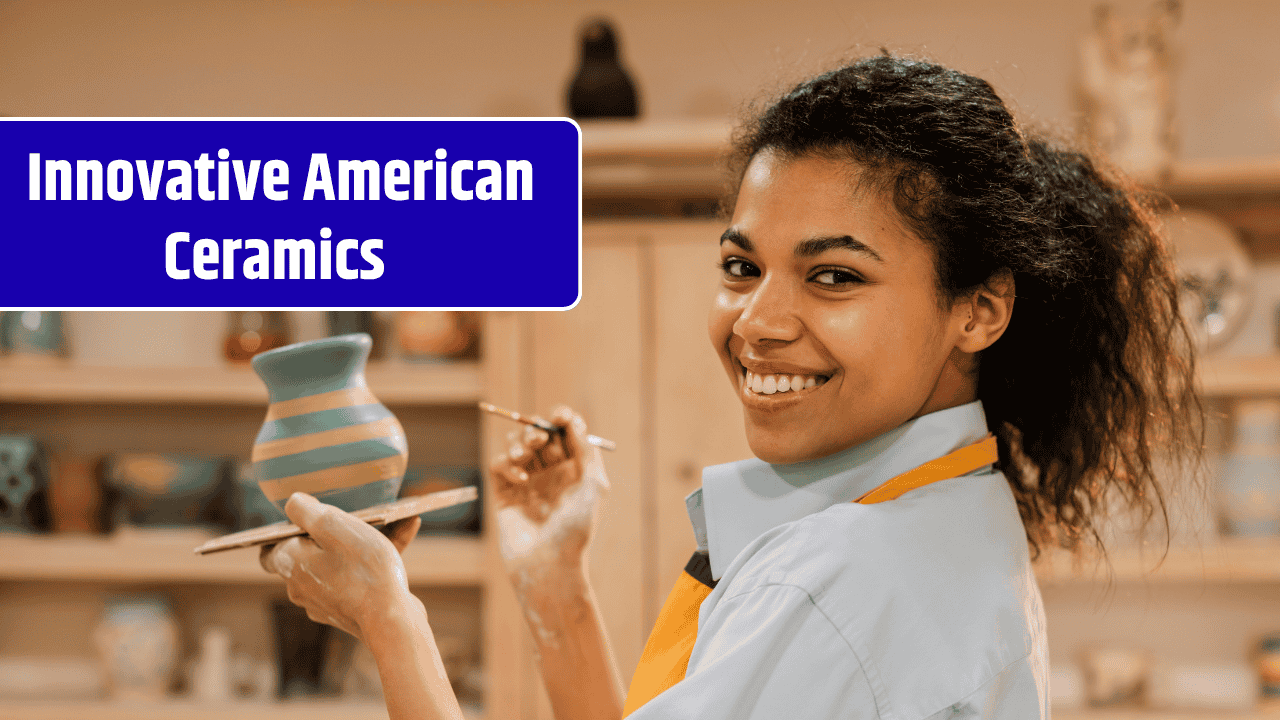
Clay — one of humanity’s oldest materials — has entered a new era. Across the United States, a new generation of ceramic artists is redefining what the medium can do, pushing it far beyond function and form. Their work blends sculpture, installation, performance, and science, exploring the very limits of material transformation. What was once considered “craft” is now at the center of fine art discourse, merging tradition with radical experimentation.
From massive clay assemblages and glazed abstractions to digitally fabricated vessels and conceptual installations, American ceramic artists are proving that innovation can be both tactile and transformative.
From Utility to Concept: Redefining Clay

For centuries, ceramics were viewed through a functional lens — cups, plates, and pots shaped by hand and fire. But since the mid-20th century, American ceramicists have fought to redefine that narrative, positioning clay as a medium of conceptual and sculptural exploration.
Artists such as Peter Voulkos and Betty Woodman laid the groundwork, dismantling the divide between craft and fine art. Today, that legacy continues with a new generation who treat clay as a language — one capable of addressing identity, ecology, and cultural heritage.
Museums and galleries across the country, from the Museum of Fine Arts, Boston to the Los Angeles County Museum of Art, are taking note. Recent exhibitions such as Nature, Sculpture, Abstraction, and Clay have cemented ceramics as a driving force in contemporary art.
Innovation in Material and Method

Modern ceramicists are no longer confined by wheel-thrown perfection or kiln-bound boundaries. Instead, they experiment boldly with technique, chemistry, and concept. Here’s how they’re transforming the field:
1. Expanding Scale and Form
Artists like Annabeth Rosen construct monumental sculptures composed of hundreds of fired fragments. Her works — chaotic, layered, and bursting with energy — reject classical symmetry in favor of dynamic, almost geological formations. Each fragment bears the imprint of process and chance, revealing clay’s potential for both fragility and force.
2. Blurring Painting and Sculpture
Lauren Mabry bridges the worlds of ceramics and painting, using glazes as her palette. Her vividly glazed cylinders and wall pieces seem to erupt with color and motion, suggesting both Abstract Expressionism and liquid alchemy. By treating glaze as pigment, she transforms the surface into an expressive field rather than a decorative coating.
3. Tradition Meets Contemporary Commentary

Jami Porter Lara employs ancient Pueblo hand-coiling techniques to create vessels that mimic modern plastic bottles. Her burnished black surfaces recall both ancestral craftsmanship and industrial waste, prompting viewers to question the relationship between consumption, environment, and cultural continuity.
4. Conceptual Minimalism and Domesticity
Nancy Selvin explores the vessel as metaphor — her pared-down, contemplative sculptures evoke stillness, memory, and the traces of touch. In her hands, clay becomes a language of presence and absence, simultaneously grounded and ethereal.
5. Technology and Experimentation
Emerging artists are merging traditional craft with cutting-edge technology. Digital modeling, 3D clay printing, and new glaze formulations are expanding ceramics into hybrid terrain. Clay is now programmable, reproducible, and responsive — a material as much of the future as of the past.
Why Material Innovation Matters
The transformation of ceramics mirrors broader shifts in art and culture. Material innovation in clay is not just about aesthetics — it’s about how artists think, make, and connect.
- Embodied Process: Clay demands touch, pressure, time. Each piece carries the memory of the artist’s body, gesture, and labor.
- Concept Through Material: The material itself becomes message — whether exploring fragility, permanence, or transformation.
- Breaking the Craft Barrier: Once sidelined as decorative art, ceramics now claim full parity with painting and sculpture in major institutions.
- Cultural and Environmental Dialogue: Clay is earth. Its extraction, use, and firing inherently tie the artist to land and ecology — making sustainability and material ethics central to the conversation.
By interrogating these material relationships, American ceramicists are not just making new forms — they’re rethinking what creation itself means in an age of mass production and digital displacement.
Leading Voices in Contemporary Ceramics
- Annabeth Rosen (California) – Her large-scale clay accumulations challenge viewers to see fragility as strength.
- Lauren Mabry (Philadelphia) – Celebrated for her painterly glazes and experimental surfaces.
- Jami Porter Lara (New Mexico) – Uses pre-Columbian techniques to critique consumerism and waste.
- Kathy Butterly (New York) – Creates vividly glazed small-scale sculptures that merge humor and technical mastery.
- Ebitenyefa Baralaye (Detroit) – Examines spirituality, identity, and race through ceramic forms informed by West African traditions.
- Simone Leigh (New York) – Blends ceramics with bronze and architecture, reclaiming Black female form and cultural space.
Each of these artists proves that clay — humble, malleable, ancient — remains one of the most potent vehicles for contemporary thought.
Challenges and New Frontiers
Ceramics is a medium of contradictions: it’s elemental yet technical, fragile yet enduring. Artists face ongoing challenges, from material sustainability to institutional recognition.
- Sustainability: Firing clay at high temperatures consumes energy, and many artists are exploring alternative firing methods, recycled materials, or natural glazes.
- Scale and Fragility: Working large brings engineering challenges — cracking, warping, and firing logistics — that push both artist and kiln to their limits.
- Recognition and Valuation: While museums increasingly collect ceramic art, the market still undervalues it compared to painting and sculpture. This gap is slowly closing as collectors recognize its innovation and depth.
- Digital Transformation: The integration of 3D printing, AR/VR, and hybrid materials may define the next era of ceramics, merging the tactile with the virtual.
FAQs
What makes today’s American ceramic art different from traditional pottery?
Contemporary artists approach clay conceptually — using it to explore ideas, not just to create functional vessels. Innovation in form, scale, and surface pushes ceramics firmly into the realm of fine art.
Who are leading figures in material experimentation?
Artists such as Annabeth Rosen, Lauren Mabry, Jami Porter Lara, and Simone Leigh are at the forefront, each redefining clay through distinct visual and conceptual vocabularies.
How are new technologies influencing ceramics?
3D clay printing, experimental glazes, and hybrid materials allow artists to combine digital precision with handcraft intimacy.
Why are ceramics gaining recognition in contemporary art circles?
Because the medium bridges tactile craftsmanship with conceptual sophistication, aligning perfectly with current interests in materiality, sustainability, and identity.
Is there still a place for functional ceramics in this movement?
Absolutely. Many artists merge utility with expression, showing that a vessel can beth useful and profoundly symbolic.