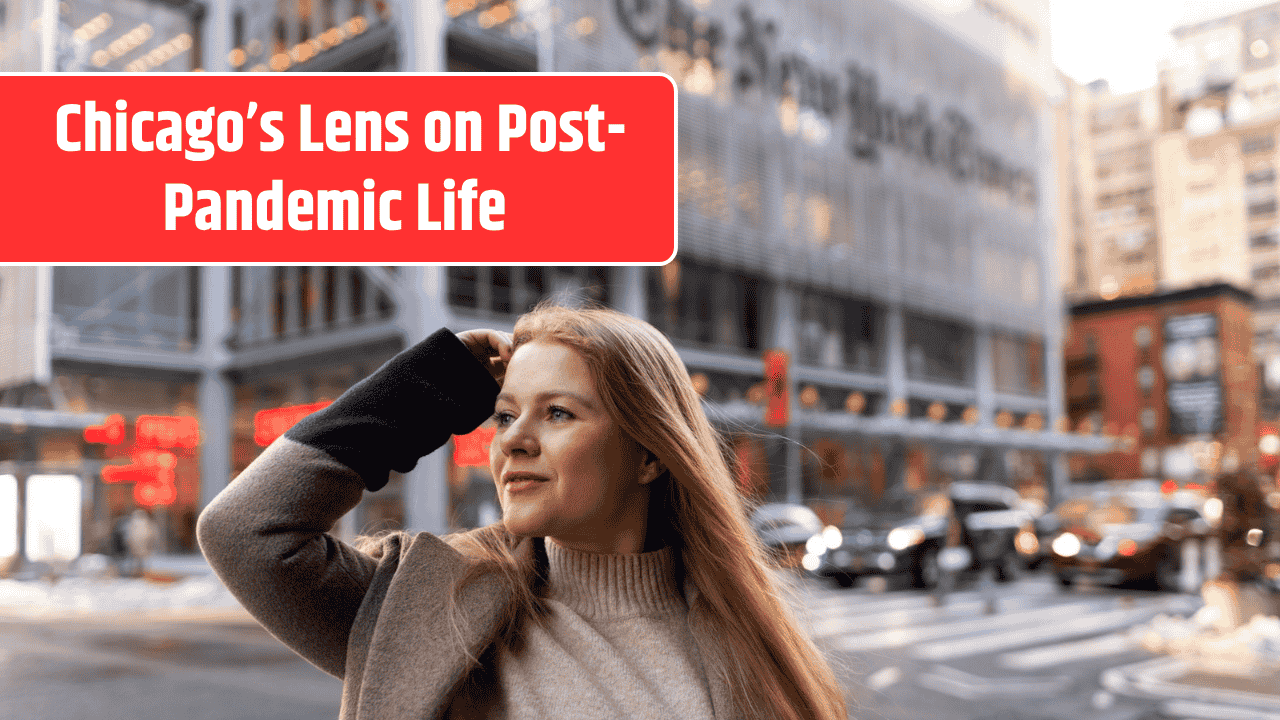
In the wake of the COVID-19 pandemic, Chicago — a city long defined by its neighborhoods, its architecture, and its relentless rhythm — is finding its visual voice again through the lens of its photographers. Across galleries, newsrooms, and community centers, Chicago’s photographers are documenting what “normal” looks like now.
Their work captures more than reopened streets and lifted mandates; it reveals a deeper portrait of a city healing, reflecting, and redefining itself. These images — sometimes quiet, sometimes defiant — tell the story of resilience in an urban landscape forever altered.
The City Through a Changed Lens

The pandemic changed how photographers saw their city. Empty sidewalks and shuttered storefronts gave way to new rituals of connection: outdoor dining in the cold, masked commuters, improvised festivals, and mural projects celebrating frontline workers.
In 2020, Mark Hersch, a Chicago-based photographer, began a project that would soon capture the world’s attention. Using archival images of Chicago’s historic streets and overlaying them with his own photographs taken during lockdown, Hersch’s “rephotography” series — Time After Time — created haunting composites where past and present coexist. The results are uncanny: horse-drawn carriages blur into modern taxis, 1920s crowds fade into masked pedestrians. His work visually unites Chicago’s resilience across a century of upheaval.
Other photographers, like Manuel Martinez, a photojournalist with WBEZ, have documented life from behind the scenes — showing how ordinary Chicagoans adapt, rebuild, and reimagine work, community, and family. Martinez notes that the pandemic “changed how we approach intimacy and storytelling,” as the camera became a bridge between isolation and connection.
Stories Emerging from the City’s Neighborhoods

What makes Chicago’s photographic response distinct is its localism. Each neighborhood — Pilsen, Englewood, Logan Square, Little Village, Uptown — has produced its own visual language of recovery.
- In the South and West Sides, photographers document mutual-aid efforts, pop-up vaccination drives, and the endurance of small Black- and Latino-owned businesses. These images foreground the community’s strength amid systemic inequities exposed by the pandemic.
- In the Loop and along the lakefront, photographers are turning their lenses toward public space — parks, CTA stations, and streets once empty, now slowly pulsing again with life.
- In immigrant communities, photographers highlight cross-generational stories: children returning to schools, families reuniting after years apart, churches and festivals reopening with new purpose.
Many of these projects are emerging from local collectives such as the Chicago Alliance of Visual Artists (CAVA) and independent initiatives like the Bridgeport Art Center’s photo residencies, which encourage photographers to engage directly with communities in transition.
Themes Shaping Post-Pandemic Photography
Chicago’s visual chroniclers are less interested in nostalgia and more focused on transformation. The key themes emerging across projects include:
- Resilience and Reconstruction: Documenting how small businesses, artists, and educators rebuild livelihoods and community life.
- Isolation and Connection: Exploring human intimacy and distance in the aftermath of collective trauma.
- Architecture of Change: Capturing the new cityscape — from outdoor classrooms and improvised performance venues to murals celebrating essential workers.
- Memory and Time: Using archival layering, rephotography, and analog techniques to merge past and present — a symbolic act of reclaiming continuity.
- Social Justice and Visibility: Highlighting inequities amplified by the pandemic, including housing insecurity, healthcare access, and racial disparities in public policy.
Through these themes, Chicago photographers are not merely observers — they are narrators of a shared civic experience.
The Return of Street Life
For street photographers, Chicago has always offered a rich stage. But post-2020, the street feels different. Crowds are cautious, public intimacy altered. Photographers like Clarence Darrow Center alumnus Ken Carl have focused on subtle gestures — hands touching through gloves, masked smiles, eyes meeting across distances.
Public events like the Chicago Summer Dance series, Maxwell Street Market, and neighborhood parades are once again thriving, offering renewed opportunities for candid documentation. The tone is often bittersweet: the joy of return framed by the memory of absence.
Exhibitions and Archives
Several Chicago institutions are now preserving these visual testaments.
- The Museum of Contemporary Photography (MoCP) launched the digital archive Reopening Chicago, featuring works that explore the city’s reemergence from isolation.
- The Chicago History Museum is acquiring community-submitted photographs for its “Pandemic Archive,” ensuring that local experiences form part of the city’s historical record.
- Independent galleries such as Filter Photo and Bridgeport Art Center have hosted exhibitions showcasing how photographers capture emotion and empathy through post-pandemic realities.
These archives are crucial, not just for artists but for future generations seeking to understand how a metropolis redefined itself after crisis.
The Power and Responsibility of the Lens
For many Chicago photographers, documenting post-pandemic life is an act of both art and ethics. They wrestle with questions of representation: Whose recovery is visible? Who remains unseen?
Photographers working in schools, hospitals, and shelters have emphasized the importance of consent and dignity in their images. Their work blurs the line between art and advocacy, asking how photography can support healing rather than exploitation.
This sense of responsibility reflects a broader shift in the role of the photographer — from detached observer to engaged participant in civic life.
FAQs
Which photographers are most associated with documenting post-pandemic Chicago?
Mark Hersch, Manuel Martinez, Ken Carl, and several community-based artists working through institutions like MoCP and Filter Photo have been leading this visual movement.
What are the main themes in post-pandemic photography?
Renewal, resilience, urban change, community rebuilding, and the tension between isolation and reconnection.
Are there exhibitions showcasing this work?
Yes — institutions like the Museum of Contemporary Photography and Chicago History Museum have developed exhibits and archives dedicated to pandemic and post-pandemic imagery.
How does this work differ from early pandemic photography?
Early work focused on emptiness and loss; current photography emphasizes regeneration, adaptation, and rediscovery of shared spaces.
Why is Chicago a significant setting for this kind of documentation?
Because of its cultural diversity, architectural richness, and strong documentary photography tradition — from the Chicago School of Photographers to contemporary photojournalism, the city has always been a visual storyteller’s muse.