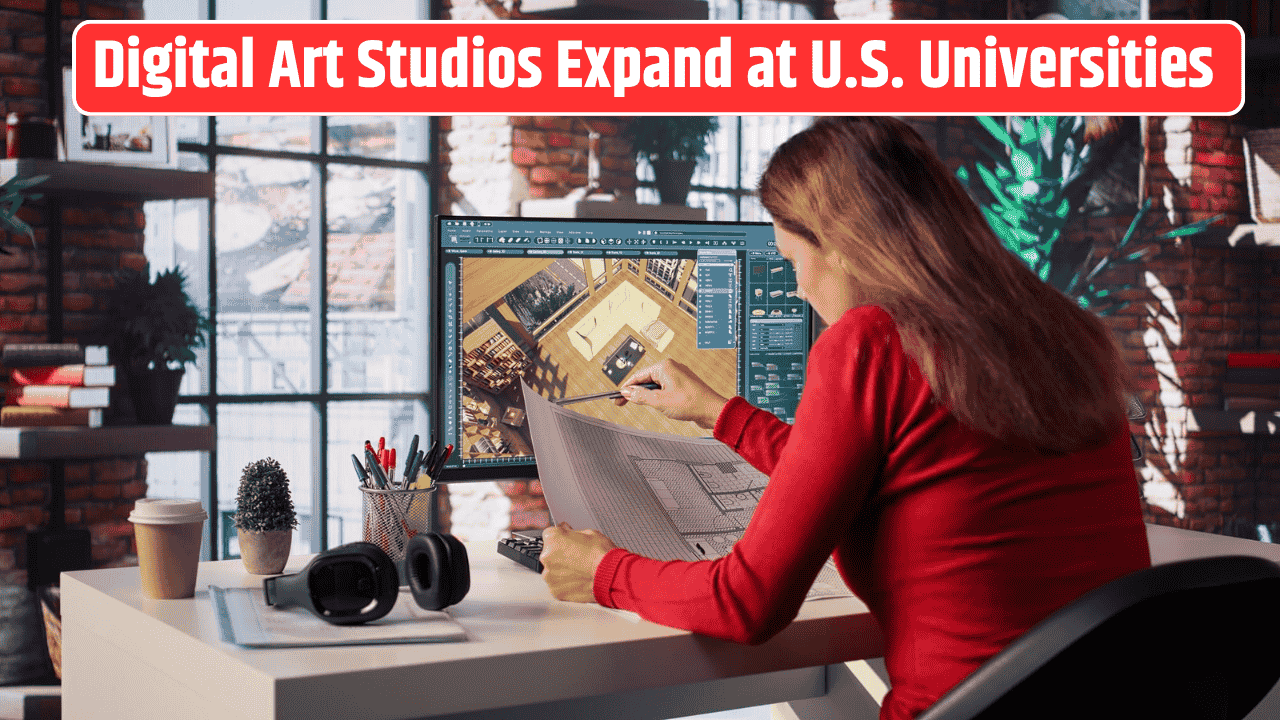
Across the U.S., universities are increasingly embracing digital art studios — dedicated labs, programs, and facilities where art meets technology, and students explore visual media that go beyond the canvas. These developments reflect a broader shift: the expanding role of digital media in creative practice, the fusion of art + technology, and the demand for new forms of expression in higher education.
The Changing Landscape of Art Education
Historically, fine art education focused on painting, sculpture, printmaking, and traditional media. But with the rise of computing, digital graphics, motion media, interactive installations and virtual/augmented reality, art education has had to adapt. Universities are responding by building out digital art studios — dedicated spaces with hardware, software and media-production tools enabling students to create digital, immersive, and interactive artworks.

For example:
- At Indiana University’s Eskenazi School of Art, Architecture + Design, the “Digital Art” program offers B.A., B.F.A. and M.F.A. paths, and features dedicated labs (DART Lab) with VR gear, video-installations and hybrid studio spaces. Eskenazi School of Art
- At Ohio University, the “Digital Art + Technology” program emphasises fabrication, coding, animation, interactive media — showing how digital art studios now include making in physical space and the digital realm. Ohio University
- At New York Institute of Technology (NYIT), the B.F.A. in Digital Arts lists motion capture, gaming, 3D printing, interactive media as key components of the studio curriculum. NYIT
This trend isn’t limited to big name schools — smaller liberal arts colleges and state universities are also adding digital studio art tracks. Albright College+1
What Drives the Growth
Several factors contribute to this rise:
- Technological convergence: As digital tools (VR/AR, motion capture, 3D printing, game engines) become more accessible, art students and educators are able to use them creatively.
- Industry demand: The commercial world increasingly values skills in digital content creation, animation, interactive media, and game design. Universities respond to this demand by aligning art programs accordingly.
- Expanded definitions of art: Contemporary art practices have moved into interactive installations, media art, networked work, and hybrid forms — so art education evolves to accommodate.
- Student interest: Students entering art schools are often digitally savvy and interested in media beyond traditional studio work — they expect access to digital studios.
- Institutional investment: Universities are investing in facilities to stay competitive — digital art studios signal a forward-looking program and attract students.
Features of a Digital Art Studio Environment

In many of these programs, a “digital art studio” includes:
- Dedicated lab spaces with high-performance computers, motion capture rigs, VR/AR headsets, projection systems.
- Fabrication and studio zones (for example 3D printers, laser-cutters, CNC machines) integrated with art practice.
- Mixed media & new media studios: video, audio, interactive installation, sensors, physical computing.
- Courses blending art and technology: coding for artists, interactive media, game design, motion graphics, digital fabrication. For instance, at Pratt Institute’s “Art + Technology / Digital Arts” BFA: “Courses include interactive media, coding for artists, interactive installation, physical computing…” Pratt Institute
- Collaboration and interdisciplinarity: digital art students often work across departments (computer science, engineering, media studies, art) and sometimes with industry.
- Exhibition and public-facing components: digital art studios increasingly support student shows, interactive installations, and public-facing work, not just class assignments.
Implications for Students and Institutions
For students:
- They gain flexible skill-sets — art plus digital media plus interactive design — which opens up careers in animation, game design, UX/interaction design, media arts, installation art.
- They have access to cutting-edge tools and facilities that were once available only in industry or specialized labs.
- They can work in hybrid modes: digital + physical, interactive + narrative, concept + code.
For institutions:
- Programs that invest in digital art studios can position themselves as forward-thinking, attracting students interested in “new media” and “digital creativity.”
- They have to commit to ongoing updates: digital media evolves fast, so labs need refresh cycles, software licensing, tech support.
- Curriculum must adapt: blending traditional art foundations with coding, interactive media, fabrication, media theory.
- Faculty must often have hybrid skill-sets: art practice + digital media + technology fluency.
Challenges to Consider
- Resource intensity: These studios cost money: hardware, software, specialized labs, tech support, maintenance. Smaller schools may struggle.
- Keeping up with change: Digital media evolves quickly — what’s cutting-edge today may be outdated in a few years; institutions must plan for refresh.
- Balancing foundations and experimentation: Art programs must ensure students still gain strong foundations in concept, aesthetics, material, history — not just tech.
- Access and equity: As programs require tech-heavy facilities, ensuring equitable access (students from all backgrounds) is important.
- Curriculum clarity: Students may enter expecting “digital tools” only; programs must articulate how the studio art + digital media blend works, and what outcomes look like.
Looking Ahead: What’s Next
- Expect growth in immersive media studios within art schools — VR/AR, mixed reality, spatial media will become even more central.
- Greater collaboration between art schools and tech/software industries: internships, co-located media art studios, partnerships with game studios or creative tech firms.
- More hybrid degrees: “Digital Art + AI”, “Interactive Media Arts”, “Art & Technology Innovation” — programs that blend digital art with emergent tech like AI, data-visualisation, machine learning. For example, the program at York College of Pennsylvania includes “Digital Art and Artificial Intelligence” offering skills in AI tools and storytelling. ycp.edu
- Increased public engagement: studios not just for students but for public exhibitions, community media art projects, cross-disciplinary labs where art students collaborate with engineers, designers, social scientists.
- More flexible formats: online/digital-hybrid studios, remote workshops, cloud-based media labs — allowing access beyond campus.
FAQ
What kinds of degrees might include digital art studios?

Degrees such as B.F.A. or B.A. in Digital Arts, Digital Studio Art, Art + Technology, Interactive Media Arts. Schools like Indiana University, Ohio University, NYIT offer such.
Do students need to be good at programming to join?
It depends on the program. Some courses include coding or physical computing (interaction design, sensors). But many programs balance technical skills with creative/media production — so students without heavy programming background can succeed, especially if the curriculum supports Digital Art + Technology in approachable ways.
Will this kind of skill set help in careers?
Yes. Digital art studio training opens avenues in animation, game design, UX/interaction design, motion graphics, digital fabrication, multimedia art installations, VR/AR experiences. Many industries value digital content creation and interactive media.
Is traditional studio art dying out?
Not at all. Traditional media remain important. The best programs integrate traditional art foundations (drawing, painting, sculpture, critical art history) with digital media and experimentation, giving students a broad base plus innovation.