In the sprawling metropolis of Los Angeles, murals are far more than art — they are the city’s collective voice. From the colorful walls of Boyle Heights to the urban facades of Downtown’s Arts District, street artists are transforming neighborhoods into living canvases of resistance, remembrance, and hope. Through bold imagery and public accessibility, LA’s muralists are addressing urgent social justice issues — racial inequality, immigration, environmental justice, gender identity, and community empowerment — turning the city’s streets into an open-air dialogue about justice and belonging.
A Legacy of Protest and Pride
Murals have been intertwined with the history of Los Angeles for decades. In the 1970s, as the Chicano Movement gained momentum, artists began using walls to tell stories that mainstream media ignored. Out of that era came one of the most iconic murals in the United States: The Great Wall of Los Angeles, conceived and led by Judy Baca and the Social and Public Art Resource Center (SPARC). Stretching nearly half a mile along the Tujunga Wash in the San Fernando Valley, the mural depicts California’s history from an inclusive lens — highlighting Indigenous peoples, women, immigrants, and communities of color who helped shape the state.

The Great Wall set the tone for what murals could do in LA — serve as historical records, instruments of empowerment, and tools for activism. Judy Baca once described her work as “a visual conversation with the public about who we are and where we’ve been.” That spirit continues today as a new generation of muralists take up the brush to reflect on where we’re headed.
The Modern Mural Movement
In recent years, Los Angeles has witnessed a revival of politically engaged street art, driven by movements for racial and social justice. During the 2020 Black Lives Matter protests, boarded-up storefronts along Melrose Avenue became makeshift canvases for community expression. Artists and residents painted murals honoring George Floyd, Breonna Taylor, and others killed by police violence. The visual impact was immediate — what began as protest art evolved into lasting cultural commentary.
In South LA and Echo Park, artists continue this momentum with murals celebrating Black, Brown, and Indigenous unity. Works like Nina Chanel Abney’s “Untitled (L.A. Stories)” and Cristina Martinez’s “She Can Do Both” illustrate strength, solidarity, and female empowerment, merging contemporary aesthetics with calls for justice.

Organizations like SPARC, Mural Conservancy of Los Angeles, and community groups in East LA are actively supporting these projects, providing walls, funding, and preservation to ensure that activist art remains visible for generations to come.
Themes of Justice and Identity
Racial Equity and Representation
LA’s murals often reclaim space in communities that have faced displacement and systemic neglect. Murals in Boyle Heights and South Central celebrate multiracial unity and pay homage to historical civil rights figures. Artists depict everyday heroes — farmworkers, nurses, educators — alongside revolutionary icons like Cesar Chavez, Angela Davis, and Dolores Huerta, connecting past struggles to present ones.
Immigration and Border Narratives
Artists like Ernesto Yerena Montejano and Favianna Rodriguez use public walls to explore migration, identity, and belonging. Their work confronts xenophobia while celebrating cultural pride. Murals often include motifs such as monarch butterflies, symbolizing migration and resilience, linking LA’s immigrant communities to global movements for justice.
Environmental and Urban Justice
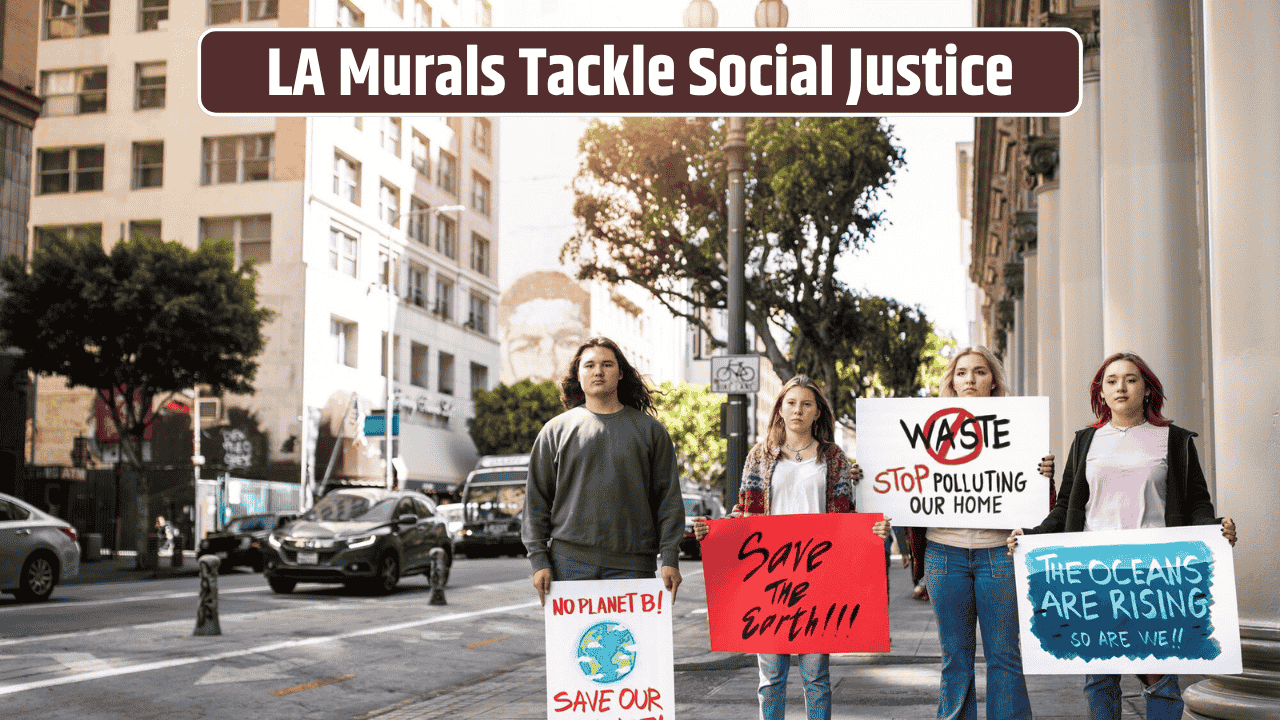
Murals also address ecological concerns, highlighting the intersection between social and environmental issues. Projects like “Our River, Our Future” in the LA River corridor combine public art with climate awareness, illustrating that environmental degradation disproportionately affects marginalized communities.
Gender and Queer Identity
Female and LGBTQ+ artists have carved new spaces in LA’s mural landscape. Their murals use color, abstraction, and symbolism to challenge gender norms and reclaim visibility. From feminist tributes in Highland Park to queer solidarity murals in Silver Lake, LA’s walls now celebrate diversity in all its forms.
Art as Collective Action
One of the defining characteristics of LA’s mural culture is its collaborative nature. Artists often work hand-in-hand with local residents, youth programs, and activists. These murals are not imposed; they’re co-created — a process that gives voice to the community and strengthens civic pride.
Judy Baca’s SPARC continues to embody this model, training young artists through apprenticeships and community projects. In neighborhoods where murals have been vandalized or erased, local youth have led restoration efforts — reclaiming both the art and the narrative it represents.
The Challenges Facing Muralists
Despite their cultural importance, LA’s muralists still face obstacles.
- Legal and bureaucratic hurdles: Many artists must navigate city regulations and permits, and illegal works risk being painted over.
- Gentrification pressures: Ironically, murals that beautify neighborhoods can attract real estate interest, driving up rents and displacing the very communities they represent.
- Preservation issues: Sunlight, pollution, and vandalism take a toll on outdoor murals. Without funding for maintenance, many historic works risk disappearing.
Yet artists remain undeterred. For them, impermanence is part of the art’s power — each mural exists in conversation with its moment, and even when erased, its message endures.
Looking Forward: A Living Canvas
Los Angeles is embracing public art as an evolving social dialogue. City programs and nonprofit organizations are now funding murals that amplify voices of marginalized communities, while digital platforms document and map these works for global audiences.
Emerging artists are also blending traditional techniques with new media — integrating augmented reality, projections, and QR-coded storytelling to make murals interactive. These innovations ensure that mural art continues to evolve while keeping its activist spirit intact.
As the city grows more diverse and politically aware, LA’s walls will remain its pulse — a reflection of the city’s conscience and creativity.
FAQ
Where can visitors see notable social-justice murals in Los Angeles?
Start with The Great Wall of Los Angeles in the San Fernando Valley, then explore Boyle Heights, South LA, and the Downtown Arts District. Melrose Avenue also features murals linked to recent protest movements.
Which organizations support muralists in LA?
A: Key groups include SPARC (Social and Public Art Resource Center), Mural Conservancy of Los Angeles, Self Help Graphics & Art, and local youth arts programs.
Are murals officially protected?
Some are registered with the City’s Mural Ordinance, which helps preserve them. However, many remain vulnerable to redevelopment or weather damage.
Can anyone participate in mural projects?
Yes. Many community projects invite volunteers, students, and local residents to help design and paint, fostering shared ownership and dialogue.
Why are murals so important in LA’s culture?
Los Angeles has one of the world’s richest mural traditions, born from social movements. Murals give visibility to communities often excluded from mainstream representation, turning art into action.