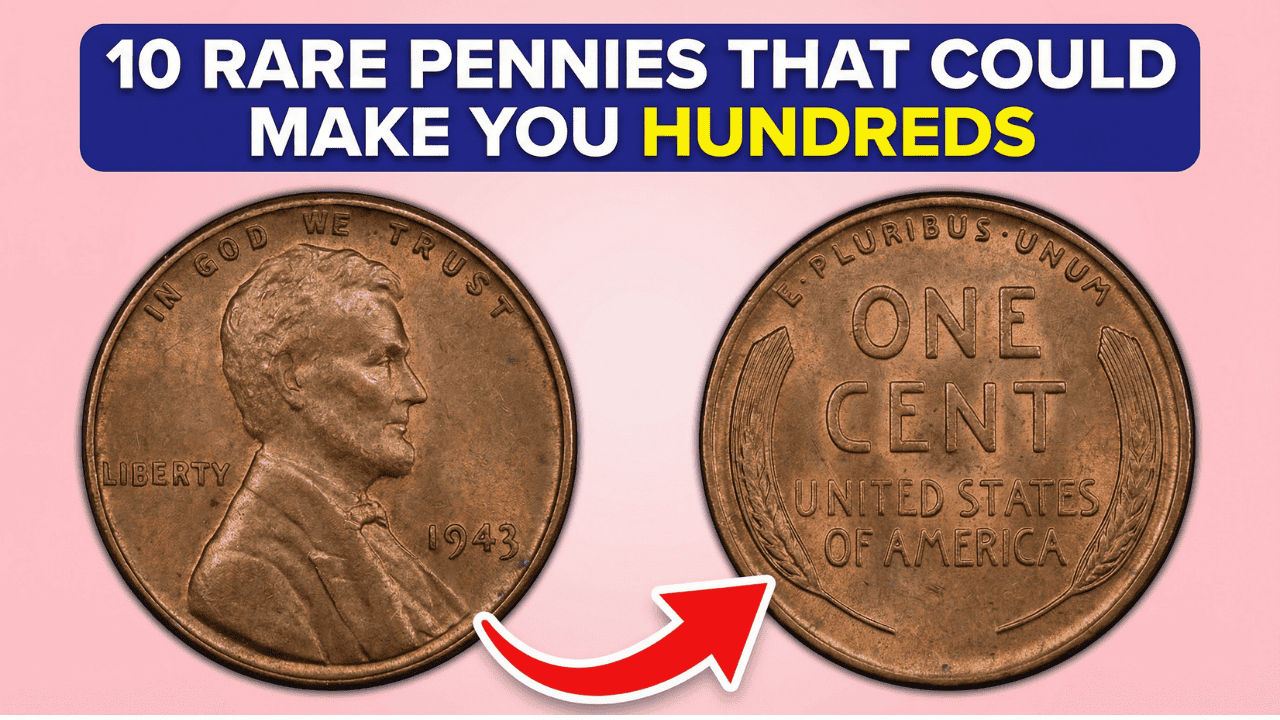
Most people wouldn’t think twice before dropping a penny into a tip jar or letting it roll under the car seat. But here’s the twist — some of those dull copper coins are worth more than your rent check. Seriously. A few “ordinary” pennies have fetched six or even seven figures at auction. Turns out, pocket change can sometimes change your life.
Let’s dig into the top 10 rare pennies that might just be sitting in your spare change — and how they turned from small change into big money.
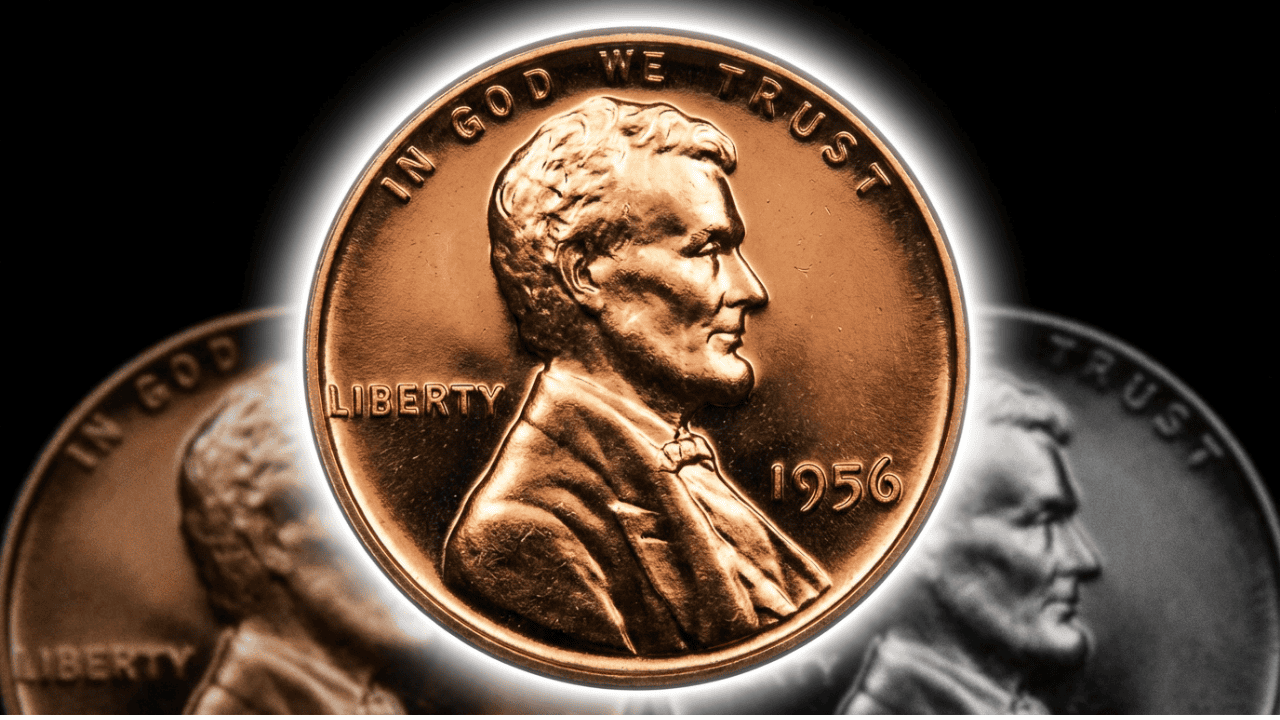
1. 1943 Bronze Lincoln Cent — The Million-Dollar Mistake
This coin is the stuff of legends. In 1943, during World War II, the U.S. Mint switched from copper to zinc-coated steel to save copper for ammunition. But a few copper blanks from 1942 accidentally made it through the presses. The result? A handful of 1943 bronze pennies that shouldn’t exist.
Today, those minting errors are among the most coveted American coins. A verified 1943 bronze cent can sell for over $100,000, and in pristine condition, it can hit $1.7 million — yes, that’s six zeroes for one cent.
You can check out official mint history via the U.S. Mint’s coin database.
2. 1955 Double Die Lincoln Cent — The “Seeing Double” Coin
The 1955 Double Die penny is instantly recognizable even without magnification. Due to a striking error, the date and the words “LIBERTY” and “IN GOD WE TRUST” appear doubled. It’s dramatic, obvious, and absolutely collectible.
A crisp version can go for $1,000 to $5,000, while circulated ones still pull a few hundred. For collectors, this coin is a rite of passage — if you find one, you’re officially in the big leagues.
3. 1909-S VDB Lincoln Cent — The First and Rarest of Its Kind
The 1909-S VDB is like the rookie card of the Lincoln penny world. It was the first year of the Lincoln cent, designed by Victor David Brenner — whose initials (VDB) appear on the reverse. But controversy over those initials led to their quick removal, making this version incredibly rare. Only about 484,000 were minted in San Francisco.
High-grade examples can easily fetch $2,000–$4,000, and the coin’s combination of artistry and history makes it a collector’s must-have.
More historical context is available via the Smithsonian’s National Numismatic Collection.
4. 1943 Copper Penny — The War-Era Rarity Worth $1 Million+
Don’t mix this one up with the 1943 steel version. A few pennies that year were struck on leftover copper planchets instead of steel. These are even rarer than the bronze variants — only about 20 confirmed examples exist.
In 2019, one such penny sold for $1.7 million through Heritage Auctions. If you stumble upon a 1943 penny that sticks to a magnet, it’s steel. If it doesn’t — congratulations, you might have something truly special.
5. 1992 Close AM Penny — A Tiny Detail with a Big Payoff
It’s modern, subtle, and sneaky. On the 1992 Lincoln cent, some coins feature the letters “A” and “M” in “AMERICA” placed unusually close together — the so-called “Close AM” variety. It’s a minor design quirk but a major payday for those who spot it.
Collectors will pay $500 or more for a clean one, according to the Professional Coin Grading Service (PCGS). Always keep a magnifier handy — this detail is easy to miss.
6. 1972 Double Die Penny — The Hidden Twin
Not as famous as the 1955 version, but the 1972 Double Die penny has clear duplication in the date and lettering. The word “LIBERTY” is especially noticeable. It’s one of those errors that quietly gained cult status among collectors.
Prices range from $100–$500, depending on grade. And yes, you can still occasionally find one in circulation — rare, but not impossible.
7. 2004 Wisconsin Extra Leaf Quarter — The Oddball Intruder
Okay, technically it’s not a penny. But this state quarter error often sneaks into conversations about rare “change finds.” Some 2004 Wisconsin quarters show an extra leaf — either high or low — on the corn husk.
These quirky variations can be worth $200 to $300. It’s a reminder that even modern mint errors can turn heads in the collector community.
8. 1983 Double Die Reverse Penny — The Quiet Contender
The 1983 Double Die Reverse isn’t flashy, but it’s no slouch either. The doubling shows up on the back of the coin, particularly on “ONE CENT” and “E PLURIBUS UNUM.” It’s subtle, yet valuable to the trained eye.
Depending on condition, these can bring in $100–$300. If you’ve got a jar of ‘80s change, time to go treasure hunting.
9. 1958 Double Die Penny — The Unicorn of Pennies
This one’s a genuine unicorn — fewer than three confirmed examples exist. The doubling is bold and obvious on the obverse, especially in the lettering. It’s so rare that even seasoned collectors might never see one outside an auction.
Estimates place its value in the $100,000–$200,000 range. If you ever find one, guard it like gold.
10. 1914-D Lincoln Cent — The Denver Classic
The 1914-D penny carries serious weight among collectors. Minted in Denver with a relatively small batch, it’s a key piece for anyone building a Lincoln cent collection. Even moderately worn versions command strong prices.
A well-preserved example can sell for $1,000 or more, especially if authenticated by a service like Numismatic Guaranty Company (NGC).
Value Snapshot
| Coin Name | Year | Estimated Value Range | Notable Feature |
|---|---|---|---|
| Bronze Lincoln Cent | 1943 | $100,000–$1.7M | Copper error during steel year |
| Double Die Lincoln | 1955 | $1,000–$5,000 | Clear doubling on obverse |
| Lincoln Cent (S VDB) | 1909 | $2,000–$4,000 | Designer’s initials removed later |
| Copper Penny | 1943 | Up to $1.7M | Struck on wrong planchet |
| Close AM Penny | 1992 | $500+ | Narrow “AMERICA” spacing |
| Double Die Lincoln | 1972 | $100–$500 | Doubling on date and lettering |
| Extra Leaf Quarter | 2004 | $200–$300 | Extra leaf on corn husk |
| Double Die Reverse | 1983 | $100–$300 | Doubling on reverse lettering |
| Double Die Penny | 1958 | $100K+ | Ultra-rare doubling |
| Lincoln Cent (D) | 1914 | $1,000+ | Low mintage, Denver mint |
How to Spot and Verify Rare Pennies
- Check for errors: Doubling, misprints, or off-center strikes are gold mines.
- Look for mint marks: “S” and “D” marks often mean limited mintages.
- Use a magnet: Helps differentiate between steel and copper 1943 pennies.
- Authenticate: Send potential finds to PCGS or NGC for grading and verification.
- Research: The U.S. Mint’s official archives are a great starting point.
FAQs
How do I know if my penny is rare?
Look for minting errors, unusual markings, or low-mintage years. Using a magnifier and comparing with online references from PCGS or NGC helps.
Can regular 1943 steel pennies be valuable?
Only if they’re in mint condition or show unusual errors. Regular steel pennies are typically worth just a few cents.
Are 1909 VDB pennies always valuable?
Only those with the “S” mint mark (1909-S VDB) are rare. The Philadelphia ones are common.
How should I sell a valuable penny?
Through certified coin dealers, major auction houses, or trusted platforms like Heritage Auctions or Stack’s Bowers.
Should I clean my old coins before selling?
Never. Cleaning can drastically reduce a coin’s value. Leave them as they are and let professionals handle grading.